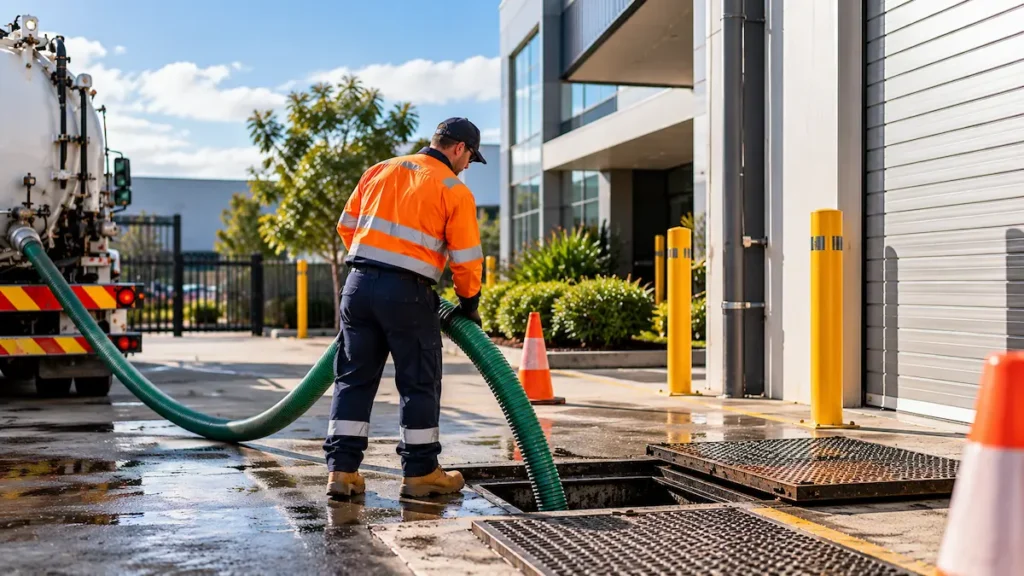
Managing a commercial property involves more than maintaining the building. Wastewater systems, holding tanks and liquid waste collection points also need attention to keep the site operating safely and efficiently.
But when a tank needs emptying or wastewater starts building up, who is responsible for arranging liquid waste removal, the landlord, tenant, property manager or facility manager?
For commercial properties in Melbourne, the answer depends on the lease, the type of waste, who controls the relevant infrastructure and any environmental duties that apply.
In most cases, the first step is to check the property’s lease or management agreement. A tenant may be responsible for arranging removal of waste generated by its business, while a property owner may manage shared wastewater infrastructure. A property or facility manager may organise the collection on someone’s behalf.
However, responsibility for booking a contractor is not always the same as responsibility under environmental law.
This guide explains how responsibilities are commonly divided, what Victorian businesses should check and how to prepare for professional liquid waste collection.
Who Is Responsible for Liquid Waste Removal at a Commercial Property?
There is no single rule that makes every commercial landlord or every business tenant responsible for arranging liquid waste removal.
The appropriate person will depend on the property’s agreements, how the wastewater system is used and the nature of the waste.
Commercial Liquid Waste Responsibilities at a Glance
| Party | Common responsibilities | What to check |
| Property owner or landlord | May maintain shared wastewater systems, tanks or infrastructure under their control. | Lease terms, maintenance obligations and ownership of the system. |
| Business tenant | May organise removal of liquid waste generated through its day-to-day operations. | Lease conditions, business waste arrangements and relevant environmental duties. |
| Property manager | May book contractors, coordinate access and maintain servicing records on behalf of the owner. | Management agreement and authority to approve work. |
| Facility manager | May monitor systems and schedule collections across larger commercial or industrial sites. | Site procedures, maintenance plans and approval responsibilities. |
These are common arrangements, not fixed legal assignments. The actual responsibilities must be checked for each property.
For example, a tenant operating a commercial business may generate wastewater that requires collection, while the property owner is responsible for maintaining the holding tank. A property manager might then coordinate the contractor and site access.
The important questions are:
- Who generates or controls the waste?
- Who owns or maintains the wastewater system?
- Who monitors when collection is required?
- Who is authorised to book and approve servicing?
- What environmental obligations apply to the parties involved?
If your property needs professional collection, you can review E & J Septics’ liquid waste removal services to understand the types of collection work available.
Why Clear Liquid Waste Responsibilities Matter
Commercial liquid waste can come from several sources, and different waste streams may require different collection, treatment and disposal arrangements.
Depending on the property’s operations, commercial liquid waste may include:
- Wastewater stored in holding tanks
- Septic waste from onsite wastewater systems
- Liquid waste generated through commercial or industrial activities
- Wastewater and sediment collected in drainage pits
- Other liquid waste streams requiring specialist collection and handling
A commercial property with an onsite septic system, for example, may need scheduled septic tank pump-outs. A construction or development site may have different wastewater collection needs that should be considered as part of its construction waste management arrangements.
When nobody has clear responsibility for monitoring or booking collection, servicing can be overlooked.
This may result in full tanks, unexpected collection requests, access problems or disruption to business operations.
Assigning responsibility helps ensure that someone is monitoring the system, arranging collection when required and keeping the relevant records.
5 Things Owners, Tenants and Property Managers Should Check
Before booking liquid waste removal at a Melbourne commercial property, it is worth confirming five important details.
These checks help clarify who is responsible, what type of collection is needed and how the service should be coordinated.
1. Check the Commercial Lease and Maintenance Agreements
Start with the documents that define how the property is managed.
Look for clauses covering:
- Wastewater and drainage systems
- Waste collection and disposal
- Maintenance of tanks and related infrastructure
- Responsibility for servicing costs
- Contractor access and approval arrangements
Do not assume the landlord is responsible because the tank is part of the property, or that the tenant is responsible because its business produces the waste.
If the documents are unclear, confirm the arrangement with the relevant parties before booking.
2. Identify the Liquid Waste Before Arranging Collection
Not all liquid waste can be handled in the same way.
The type and source of the waste can affect how it must be collected, transported and disposed of.
Wastewater from a holding tank may have different requirements from liquid waste generated by industrial operations.
EPA Victoria provides guidance on classifying industrial waste, including the importance of correctly identifying the waste.
Before contacting a contractor, establish:
- Where the waste comes from
- What the liquid is likely to contain
- Whether its composition is known
- Whether previous collection or classification records are available
If you are unsure what the waste contains, do not guess. Explain the uncertainty to the contractor. Further information or assessment may be required before collection.
3. Confirm Who Monitors the Tank or Wastewater System
Someone needs to know when the system requires attention.
Depending on the property, monitoring may involve checking tank levels, reviewing maintenance records or inspecting accessible collection points.
For sites that regularly generate liquid waste, a documented servicing schedule can make responsibilities clearer.
The schedule should identify who checks the system, who arranges collection and who to contact if a problem occurs.
4. Confirm Who Can Approve and Coordinate Collection
The person who identifies a full tank may not have authority to engage a contractor.
Before arranging a service, confirm who can:
- Request a quote
- Approve the cost
- Book the collection
- Arrange vehicle and contractor access
- Explain site safety requirements
- Receive and retain service documentation
This is especially important at properties with multiple tenants or an external property management company.
5. Keep Relevant Collection and Maintenance Records
Service records help everyone understand when the system was last attended to and when another collection may be needed.
Depending on the waste type and applicable requirements, records may include:
- Collection dates
- Waste descriptions
- Estimated or recorded quantities
- Contractor details
- Transport or disposal documentation
- Maintenance issues identified during servicing
Keeping these records organised can also help property owners and managers identify recurring problems and plan future maintenance.
Specific recordkeeping obligations depend on the waste classification and applicable regulatory requirements.
What Does Victorian Environmental Law Say About Liquid Waste?
Commercial liquid waste may fall within Victoria’s industrial waste management framework, depending on the nature of the waste.
EPA Victoria’s guidance on waste obligations and duties explains that people and businesses involved in generating, managing or controlling industrial waste can have obligations relating to its classification, handling, transport and disposal.
This distinction matters because hiring a contractor does not necessarily remove every environmental duty from the business that generated or managed the waste.
EPA Victoria also provides guidance on the duties of people involved in transporting industrial waste, including responsibilities relating to appropriate waste transport and delivery.
For property owners, tenants and managers, the practical approach is to:
- Identify the waste correctly.
- Check which parties have relevant responsibilities.
- Confirm that the proposed collection and disposal arrangements are appropriate for the waste.
- Retain documentation where required.
A lease may allocate who pays for or organises collection, but it should not be treated as the only source of information about environmental obligations.
If the waste classification or legal responsibilities are unclear, seek guidance from EPA Victoria or an appropriately qualified adviser.
When Should a Commercial Property Arrange Liquid Waste Removal?
There is no single collection schedule that suits every commercial property.
The timing depends on the wastewater system, storage capacity, volume of waste generated and any applicable maintenance or environmental requirements.
Some sites may require regular servicing, while others may need collection based on tank levels or operating conditions.
Signs a System May Need Attention
- Rising tank levels: A holding tank is approaching its operating capacity.
- Unusual odours: Persistent smells are coming from wastewater infrastructure.
- Slow drainage: Drains are backing up or taking longer than normal to clear.
- Missed servicing: A scheduled collection has not taken place.
- Increased wastewater generation: Business activity has changed and the existing servicing arrangement may no longer be suitable.
- Visible overflow: Wastewater is escaping from the system or its intended containment area.
An overflowing system requires prompt attention. Take appropriate safety and environmental precautions, and seek professional assistance.
Pumping may address the immediate build-up, but an underlying system fault could also require investigation.
For properties with predictable wastewater volumes, planned collection is generally easier to coordinate than waiting until the system is close to overflowing.
What Information Do You Need Before Booking Liquid Waste Removal?
Having the right details ready helps a contractor assess the job and discuss suitable collection arrangements.
Before requesting commercial liquid waste removal, gather the following information.
|
Information |
What to provide |
|
Property location |
Street address, Melbourne suburb and the location of the collection point. |
|
Waste type |
What the liquid contains and how it was generated, if known. |
|
Approximate volume |
Tank capacity or estimated amount requiring collection. |
|
Tank or collection point |
Location, accessibility and any relevant site details. |
|
Vehicle access |
Gates, narrow driveways, height restrictions or other limitations. |
|
Timing |
Whether the collection is planned or time-sensitive. |
|
Site contact |
The person authorised to approve work and provide access. |
If you cannot confirm the waste type, quantity or access conditions, explain what is unknown rather than presenting an estimate as a fact.
Providing accurate information early can help avoid delays and make it easier to determine suitable collection arrangements.
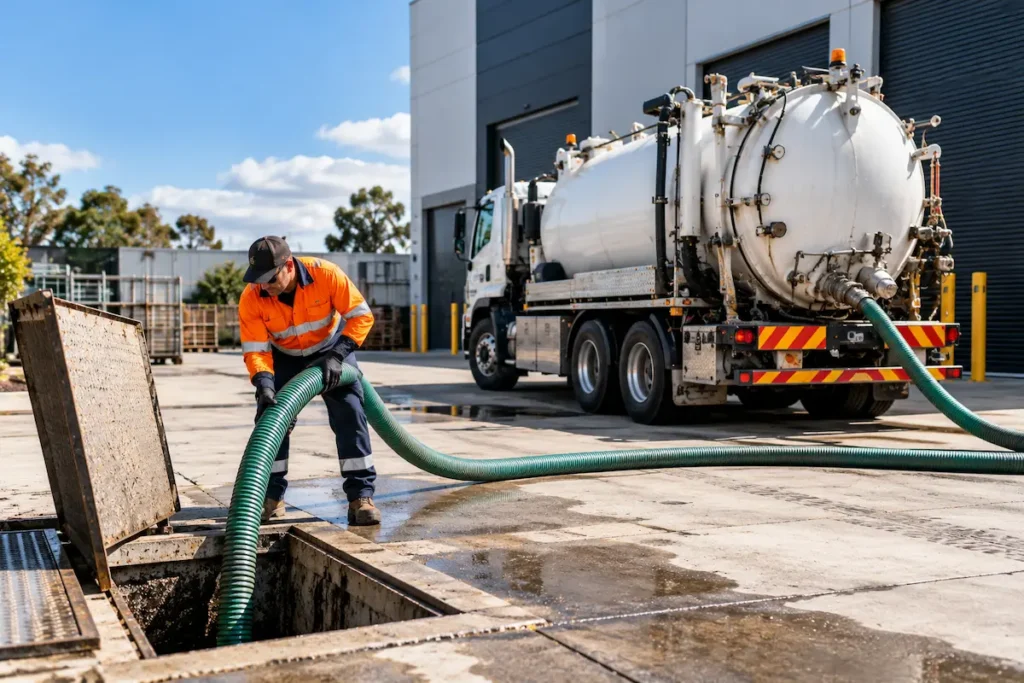
Who Should Arrange Liquid Waste Removal at a Shared Commercial Property?
Shared commercial properties can be more complicated because several businesses may use the same wastewater infrastructure.
For example, a property may have multiple tenants, a shared holding tank and an external property manager.
In that situation, it is important to establish whether the waste comes from a particular tenant’s activities or from a system serving the wider property.
The parties should confirm:
- Who controls the shared infrastructure
- Whether individual tenants have separate waste collection obligations
- Who monitors tank levels
- Who can approve contractor attendance
- How servicing costs are allocated under the relevant agreements
A simple written arrangement can help avoid missed servicing, duplicate bookings or confusion about who should contact the contractor.
Where the waste involves regulated industrial activities, the relevant environmental duties should also be considered separately from the cost-sharing arrangement.
Commercial Liquid Waste Removal Across Melbourne
Commercial properties throughout Melbourne have different wastewater systems, layouts and access requirements.
An industrial property in Dandenong may have different waste streams and access conditions from a commercial site in Bayswater or a facility on the Mornington Peninsula.
The appropriate collection arrangement depends on the waste itself, the site infrastructure, vehicle access and servicing needs.
Based in Boronia, E & J Septics provides liquid waste and septic services across Melbourne and surrounding regions.
The company’s listed service coverage includes Melbourne’s eastern suburbs, the Dandenong Ranges, the Mornington Peninsula and other parts of Victoria.
Property owners and managers can review E & J Septics’ areas served and contact the team to confirm availability for a particular property.
With experience working across domestic, commercial and industrial settings, E & J Septics can discuss different liquid waste collection requirements and site conditions.
Businesses seeking professional collection can explore E & J Septics’ liquid waste management services for more information about available services.
Is the landlord or tenant responsible for liquid waste removal?
Can a property manager book liquid waste removal?
Who pays for liquid waste removal at a commercial property?
How often does a commercial holding tank need emptying?
Does hiring a liquid waste contractor remove the business's legal obligations?
Does E & J Septics service commercial properties outside Melbourne's eastern suburbs?
Need Liquid Waste Removal at Your Commercial Property?
Whether you’re a landlord, business tenant, property manager or facility manager, clear responsibilities make liquid waste collection easier to manage.
Start by checking the relevant agreements, identifying the waste and confirming who can authorise the work.
Clear servicing arrangements, appropriate waste identification and timely collection can help reduce avoidable wastewater problems and operational disruptions.
If your commercial property has a holding tank, septic system or another liquid waste collection requirement, E & J Septics can discuss your site conditions and collection needs.
Call E & J Septics on 03 9729 6844 or contact the team to discuss liquid waste removal at your Melbourne commercial property.