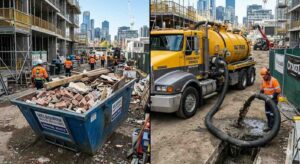
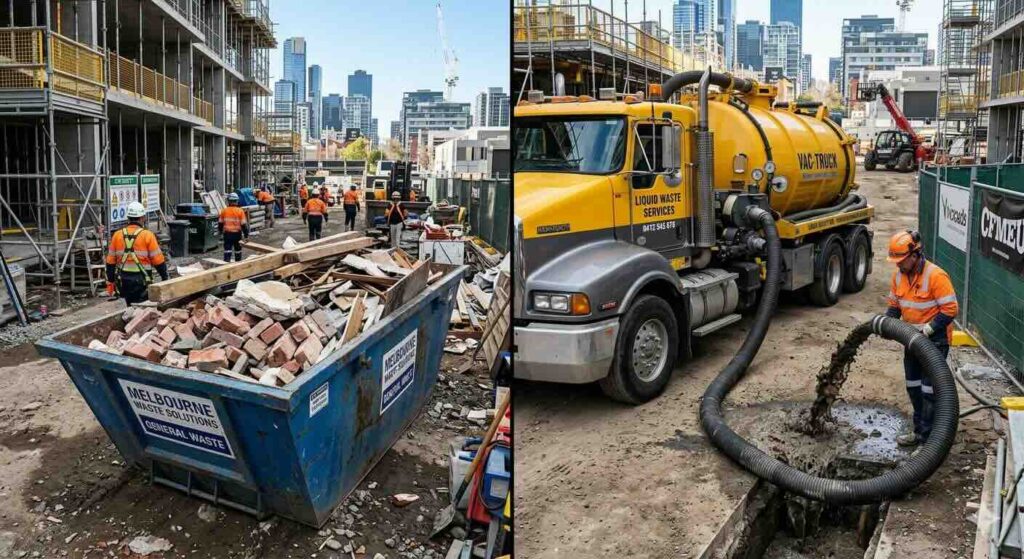
Skip bins are designed for one purpose… removing solid building debris such as timber, bricks and plasterboard.
They do this well.
But they do not manage, contain or even address liquid waste, which is a completely separate and regulated category of waste on construction sites.
Liquid waste management for construction sites in Melbourne involves handling wastewater, slurry, sewage and contaminated runoff. None of which can be placed in a skip bin.
This means that while skip bins are essential for debris removal, they solve only half of the waste problem.
On active construction sites, failing to plan for liquid waste can lead to compliance breaches, environmental risks and costly project delays.
If your project involves multiple waste streams, it’s worth understanding how professional liquid waste removal services in Melbourne work alongside standard waste solutions.
Key Takeaway: Skip Bins vs Liquid Waste on Construction Sites
Skip bins are designed to remove solid construction materials such as timber, bricks and plasterboard.
They do not manage regulated liquid waste commonly generated on building sites, including:
- Concrete washout water
- Portable toilet waste
- Septic holding tanks
- Excavation groundwater
- Contaminated stormwater
- Sewer pits and drainage systems
Construction sites that produce these waste streams require licensed providers offering construction site waste management services to remain compliant.
What Is Construction Site Liquid Waste in Melbourne?
Liquid waste on construction sites refers to wastewater and contaminated liquids generated during building activities.
Common examples include:
- Concrete washout and slurry
- Waste from portable toilets
- Septic tank waste from temporary systems
- Groundwater from excavation and pump pits
- Contaminated runoff from building materials
Under EPA Victoria regulations, this waste must be collected, transported and disposed of correctly.
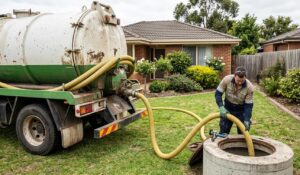
Services such as septic tank pump outs in Melbourne are essential to keep systems functioning and prevent failures on site.
The Hidden Liquid Waste Streams on Construction Sites
Many compliance issues are not caused by debris, they are caused by unmanaged liquid waste.
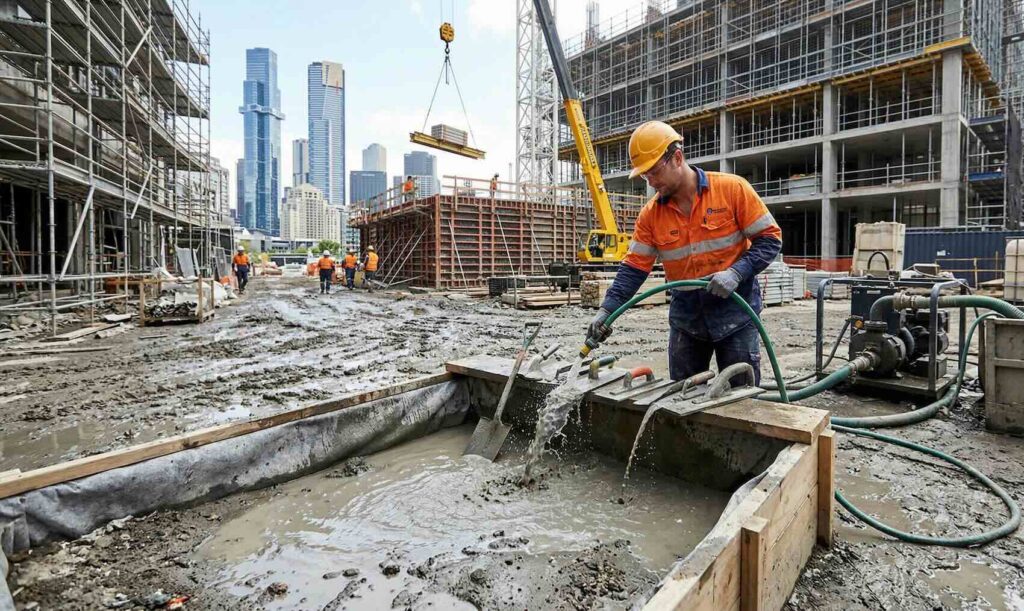
Concrete Washout and Slurry
Concrete washout water is highly alkaline and cannot be discharged into stormwater systems.
Improper handling can result in environmental damage and penalties.
Learn more about liquid waste removal for construction projects
Portable Toilet Waste
Construction sites must provide compliant sanitation for workers.
Portable toilets require regular servicing and licensed waste removal.
See how this is handled within construction site waste management services
Septic and Holding Tanks
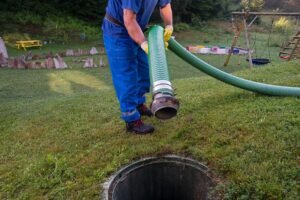
Temporary septic systems must be pumped regularly to prevent overflow and contamination.
Explore septic tank pump out services
Groundwater and Pump Pits
Excavation frequently exposes groundwater that may require controlled removal and disposal.
This is often managed alongside stormwater and sewer pit cleaning services
What Structured Liquid Waste Management Looks Like
For construction sites across Melbourne, effective waste management is planned, not reactive.
A structured liquid waste management plan typically includes:
- Scheduled portable toilet servicing
- Planned septic and holding tank pump-outs
- Safe removal of concrete washout
- Groundwater extraction and disposal
- Sewer pit and drainage cleaning
Working with a provider offering full construction waste management solutions ensures everything is coordinated under one system.
Speak With a Liquid Waste Specialist
Avoid costly delays and stay compliant from the start.
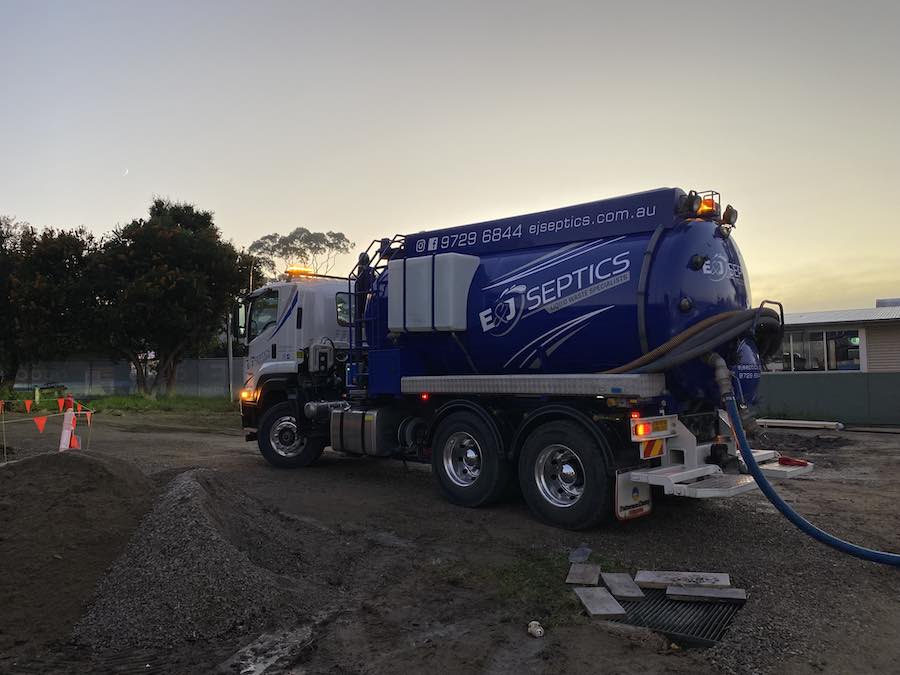
EJS Septics supports Melbourne builders with complete liquid waste solutions, including:
- Portable toilet servicing
- Septic tank pump outs
- Concrete washout removal
- Groundwater extraction
- Sewer and drainage cleaning
Contact EJS Septics today or explore their liquid waste removal services